
Games to Help Focus: A Closer Look at CircZle and CogBox

A puzzle subscription is usually split into two categories, CircZle and CogBox, and both fall under the same broad group of games to help focus rather than simply pass time.
CircZle centres on one jigsaw puzzle a month, while CogBox is a mystery box built around brain teasers and other small challenges.
Each one asks you to slow down, look closely, and stay with a single task until it resolves.
What CircZle Actually Is
CircZle is a multiplayer jigsaw puzzle where everyone solving that design works on the same artwork, with a leaderboard tracking progress.
It moves through levels and stages, starting with simpler layouts and gradually introducing more pieces and trickier shapes as you move forward, making it one of the more visual forms of hands on puzzles, since every piece has to be matched by shape and color before it fits.
A new CircZle puzzle is then delivered to subscribers on a regular schedule, so there is always another one waiting once the last is complete.
What CogBox Actually Is
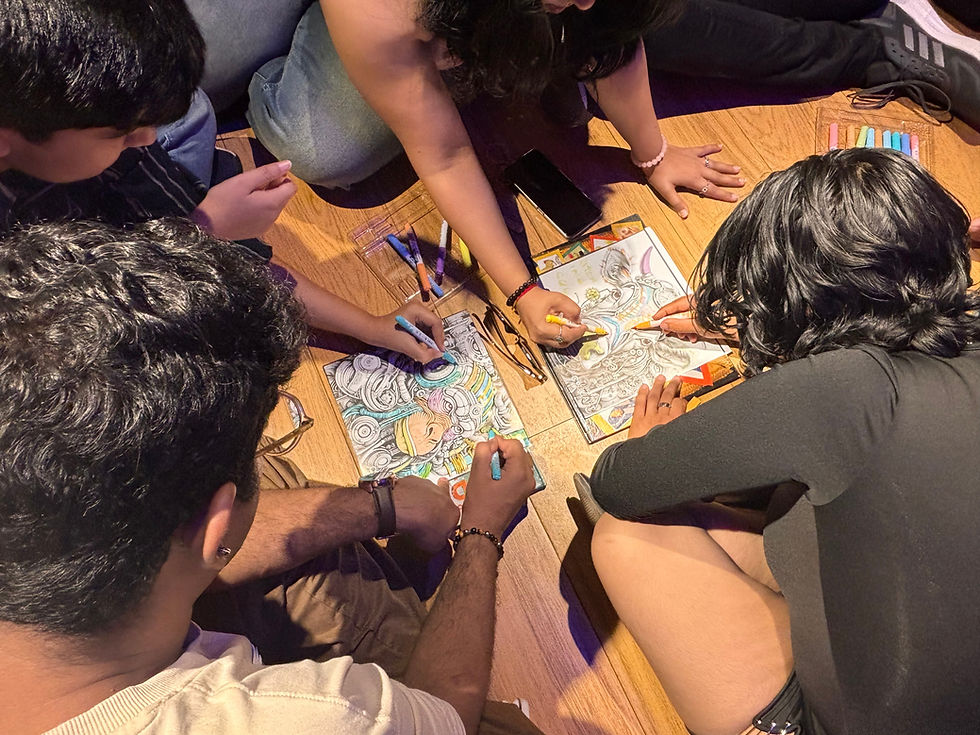
CogBox is a mystery box built around brain teasers, logic games, and adult coloring books, mixing different kinds of challenges into one box.
Some editions lean toward number- and word-based challenges; others lean toward visual or spatial ones, giving a wider range of hands on puzzles to work through.
Its contents arrive through the same kind of subscription as CircZle, changing with each new box and staying unknown until it is opened.
Why These Count as Games to Help Focus
Attention research generally agrees that tasks with a clear start and end point, and a single visual or mental target, require more sustained focus than passive activities like scrolling.
This is part of why jigsaw pieces, logic puzzles, and coloring pages are often grouped with other games to help focus:
They require sustained attention to one field of information until it resolves.
They involve trial, error, and correction, which keeps working memory active.
They offer a natural stopping point, unlike an endless feed.
For many adults, that structure offers a form of cognitive engagement that is harder to get from a phone screen.
For seniors in particular, structured tasks like these are often used informally as a way to keep attention and memory systems active, supporting steady cognitive engagement through regular, low-pressure practice.

A Few Examples to Look At
CogZart's own collections page lists individual puzzle designs, from introspective themes to sacred geometry patterns, each requiring the same kind of close, sustained attention.
Comparing a few of these side by side is a useful way to see how difficulty and detail change from one design to the next, and how that difference affects how long a puzzle can hold your focus.
Conclusion
Looked at closely, CircZle and CogBox are both structured examples of games to help focus, built around sustained attention rather than quick distraction.
Whether it is a jigsaw moving through levels and stages or a CogBox surprise, both ask for the same thing: staying with one task until it is finished.
If you are curious about games to help focus, Puzzle Subscription's CircZle and CogBox are worth exploring for yourself.
Citations
Mind Games: Discover the Cognitive Impact of Puzzles – Case Western Reserve University: https://case.edu/news/mind-games-discover-cognitive-impact-puzzles
Exercise Your Brain: Puzzles and Games to Boost Cognitive Performance – Healthline: http://healthline.com/health/mental-health/games-and-puzzles-to-exercise-your-brain
Benefits of Puzzling for Mental Health and Focus – Reality Pathing: https://realitypathing.com/benefits-of-puzzling-for-mental-health-and-focus/


Comments