
Ways to Reduce Screen Time With Activities You'll Actually Stick To

Most people already know they should cut back on screens, yet the advice rarely sticks.
That's because most ways to reduce screen time stop at "put the phone down" and skip the harder question: now what?
Without something to fill that gap, boredom takes over within minutes, and the phone comes right back out.
Real change starts with a replacement, not just a restriction.
Activities That Actually Fill the Gap
A few offline habits consistently hold up better than a blanket "no phones" rule:
Reading a physical book instead of scrolling before bed.
Cooking something from scratch instead of ordering while watching a show.
Taking a short walk without earbuds or a podcast running.
Playing a board game with a partner, roommate, or friend.
Journaling, sketching, or another small creative habit.
These are the kind of offline hobbies that give your hands and attention somewhere to go, which matters more than the willpower to simply resist a screen.
Why CircZles Fit This Gap So Well
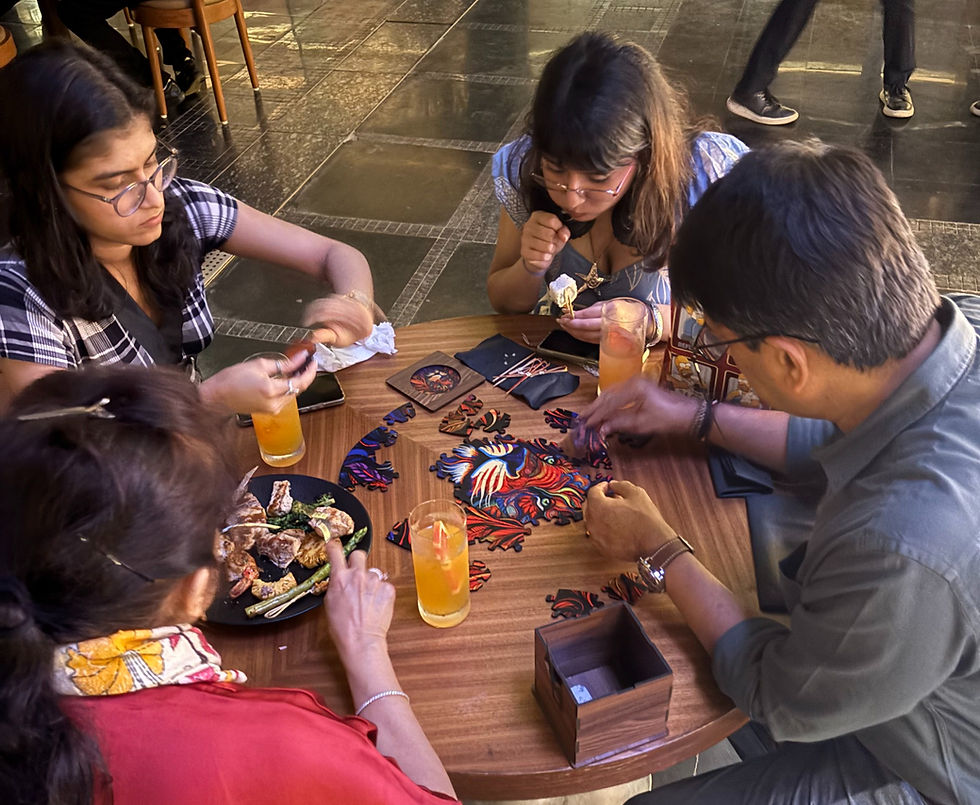
Among these offline hobbies, puzzles and brain teasers stand out as one of the more effective ways to reduce screen time for a specific reason: they offer the same small, repeated sense of progress that makes scrolling addictive, piece after piece, clue after clue, without the algorithm behind it.
A jigsaw puzzle or logic game like the ones in CircZle and CogBox gives your mind that same steady feedback loop, just aimed at something you actually finish instead of an endless feed.

When to Actually Try These Ideas
Timing matters more than most people expect when testing out new ways to reduce screen time.
A few natural windows tend to work better than trying to overhaul an entire day at once:
Right after work, before the habit of collapsing onto the couch with a phone sets in.
During the hour before bed, when screens are already working against better sleep.
On slow weekend afternoons, when boredom is what usually leads back to scrolling in the first place.
Picking even one of these windows and filling it with a book, a walk, or a puzzle is usually enough to start building a habit that sticks.
Turning It Into a Screen Free Routine
The habits above work best when they are not a one-time effort.
A recurring puzzle subscription, arriving on its own schedule, gives you something ready to reach for instead of having to decide what to do each evening from scratch.
Over a few weeks, that small routine turns into genuine screen free evenings rather than a single night of good intentions, since there is always a new puzzle or brain teaser waiting once the last one is finished.
Conclusion
Finding lasting ways to reduce screen time works best when boredom isn't part of the deal.
Between reading, cooking, walks, and a recurring puzzle to look forward to, there are plenty of screen free evenings waiting to happen, without asking you to sit around with nothing to do.
For simple ways to reduce screen time, Puzzle Subscription delivers a fresh puzzle to reach for every cycle.
Citations
Reducing Screen Time Improves Mental and Physical Health, AARP: https://www.aarp.org/health/brain-health/benefits-of-reducing-screen-time/
Digital Detoxes Work, How Reduced Screen Time Will Help You, Georgetown University: https://www.georgetown.edu/news/digital-detox-reduce-screen-time-benefits/
Health Benefits of Reducing Screen Time, American College of Physicians: https://acp-mn.com/about-acp/blog/mental-and-physical-health-benefits-of-reducing-screen-time/


Comments